
(transcript from Clubhouse recording)
Hi there, this is Joy. I don’t have any credentials or qualifiers to insert here. I’m back with the second installment of All the Words Have Been Said. As I plan on reading translations of some time honored texts, in this series, it seems that a few words about translation are in order.
There is a New Yorker article from January 5, 2017, by Rozina Ali, that points to the complexity of translation. I’ll read just a few bits here. The article is entitled, “The Erasure of Islam from the Poetry of Rumi”:
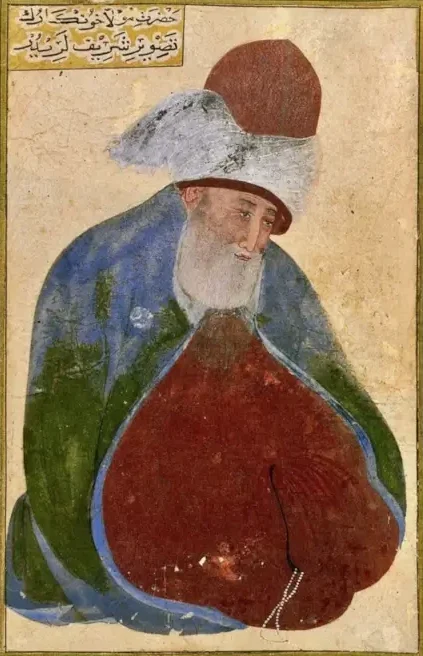
“Rumi is often described as the best-selling poet in the United States. He is typically referred to as a mystic, a saint, a Sufi, an enlightened man. Curiously, however, although he was a lifelong scholar of the Koran and Islam, he is less frequently described as a Muslim.
… Rumi’s ‘Masnavi,’ a six-book epic poem … Its fifty thousand lines are mostly in Persian, but they are riddled with Arabic excerpts from Muslim scripture.
… Rumi himself described the ‘Masnavi’ as ‘the roots of the roots of the roots of religion’—meaning Islam—’and the explainer of the Koran.’ And yet little trace of the religion exists in the translations that sell so well in the United States.”
پس بد مطلق نباشد در جهان
بد به نسبت باشد اين را هم بدان
در زمانه هيچ زهر و قند نيست
كه يكى را پا دگر را بند نيست
مر يكى را پا دگر را پاىبند
مر يكى را زهر و بر ديگر چو قند
زهر مار آن مار را باشد حيات
نسبتش با آدمى باشد ممات
خلق آبى را بود دريا چو باغ
خلق خاكى را بود آن مرگ و داغ
همچنين بر مىشمر اى مرد كار
نسبت اين از يكى كس تا هزار
مولانا جلالالدین محمد بلخی، رومی –
It’s an interesting article and you can read the whole thing online. The most profound words, words that last through the ages, are often words that point beyond themselves. Beyond the words. Yet, it is the precision of these words, and the embodiment of these words that can point the way. This precision is important.
All that’s to say, take note of your translations, and your translators, when you’re reading. That’s basically the point I want to make.
Now a verse from Rumi’s Masnavi, book four, translated by Jawid Mojaddedi, E.H. Whinfield, and Reynolds A. Nicholson, respectively—and notice the difference.
. . .
Masnavi, Book 4, Verses 65-70
Many English collections of Rumi’s work, versions of his writings, are based on English translations and not on the Persian texts. These versions may take poetic license or alter, to varying degrees, Rumi’s original meaning, intent, and precision. The text below is translated from Persian, with words inserted between parentheses for clarity.
Surely translating is a challenging task and I am grateful to those who have undertaken it, offering greater access to words worthy of sharing.
– Mawlānā Jalāl ad-Dīn Muḥammad Balkhī–Rūmī (translated by Ibrahim Gamard)Hence there is no absolute evil in the world: evil is relative. Know this (truth) also.
In (the realm of) Time there is no poison or sugar that is not a foot (support) to one and a fetter (injury) to another;
To one a foot, to another a fetter; to one a poison and to another (sweet and wholesome) like sugar.
Snake-poison is life to the snake, (but) it is death in relation to man.
The sea is as a garden to the water-creatures; to the creatures of earth it is death and a (painful) brand.
Reckon up likewise, O man of experience, (instances of) this relativity from a single individual to a thousand.
Read from and or related:
- https://www.newyorker.com/books/page-turner/the-erasure-of-islam-from-the-poetry-of-rumi
- Oxford University Press: The Masnavi translated by Jawid Mojaddedi
- sacred-texts.com: E.H. Whinfield
- Edinburgh University Press: The Mathnawí of Jaláluʾddín Rúmí translated by Reynold A. Nicholson
- https://www.masnavi.net/1/25/eng/4/51/
- https://www.dar-al-masnavi.org
- https://www.baytalfann.com/post/rumi-without-islam-the-cultural-appropriation-of-rumi