
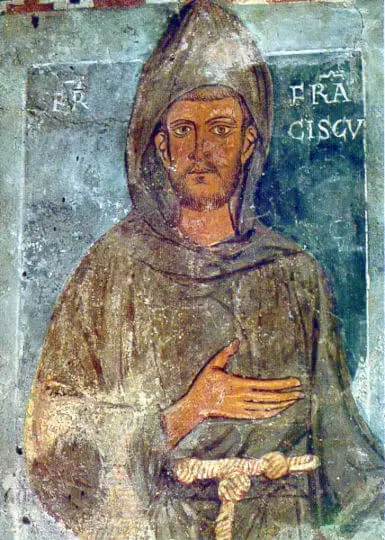
(transcript from Clubhouse recording)
Hi, this is Joy back with the third installment of All the Words Have Been Said. Another public service announcement for this episode.
Last week it was about translation and the possible biases, depending on the translator, and today, a few words about quotes and sources. For this I want to highlight an aphorism often attributed to Saint Francis of Assisi.
“What you are looking for is what is looking.”
St. Francis?
Misattribution featuring St. Francis of Assisi
“What you are looking for is what is looking,” and variations on that. For some time, I have felt a way about this being attributed to St. Francis.
It’s probably apparent by my starting this series, that I am interested in time honored words of wisdom and guidance, generally regarding how to live as a human, and typically when I hear someone quote, or somebody sends me a quote, claiming to be by someone long dead and revered or what have you, I check for the source.
For this quote in particular, I have not found any source showing that St. Francis said this, or wrote this, or whatever. You might say, “So what?” Or, “What difference does it make?” Let me respond to these imaginary questions with this from Breaking The Habit and a post entitled “Saint Francis Did NOT Say That! And That’s (Sometimes) Okay”:
“Quotes. They’re a powerful literary and rhetorical device that bring meaning to what we’re saying, strengthen our argument, and legitimize our ideas, showing that someone of significance had the same feeling about something that we have.
Or they’re completely made up.”
And this from the web site Thy Mind, O Human, a post entitled “Misattributed St. Francis Quote”:
“A few places say it is from a ‘wise man,’ leave it anonymous, say it is from ‘the mystics,’ or even attribute it to Rumi. Which is it?
If Francis did say it, that would be profound indeed. He is a revered Catholic saint, philosopher, and mystic. And if the quote can be traced to him, then it carries the weight of his teachings and insight.
This is the important point, the weight and insight. In this modern era of truth by repetition, it is advisable, to say the least, to pay really close attention to what alleged quotes people are using to gain credibility, or to be sanctioned, or trying to garner some kind of sentiment from people that maybe, well, there’s some manipulation there.
Laudato si mi Signore, per sora nostra Morte corporale,
da la quale nullu homo uiuente pò skappare:
guai a quelli ke morrano ne le peccata mortali;
beati quelli ke trouarà ne le Tue sanctissime uoluntati,
ka la morte secunda no ‘l farrà male.
Laudate et benedicete mi Signore et rengratiate
e seruiteli cum grande humilitate.
– Francesco di Pietro di Bernardone
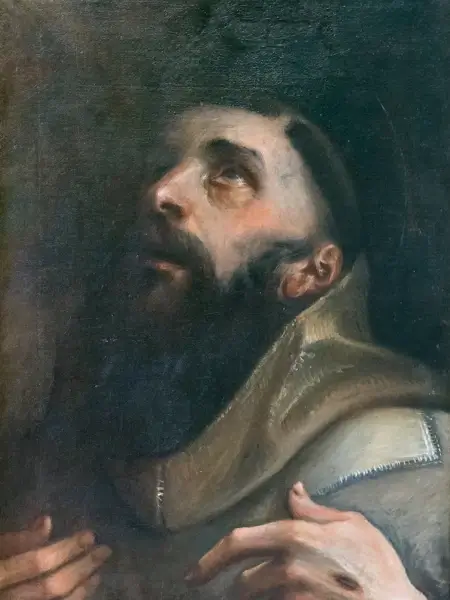
Basically what I am saying is, don’t be fooled by cheap imitations.
. . .
Actual words from St. Francis (translated into English, as per the Vatican):
Praised be You, my Lord, through our Sister Bodily Death, from whom no one living can escape. Woe to those who die in mortal sin. Blessed are those whom death will find in Your most holy will, for the second death shall do them no harm.
Praise and bless my Lord and give Him thanks and serve Him with great humility.
– Francesco di Pietro di Bernardone
Mentioned and or related and or just extra:
- https://breakinginthehabit.org/2017/10/02/st-francis-did-not-say-that-and-thats-sometimes-okay/
- https://www.thymindoman.com/misattributed-st-francis-quote-the-one-you-are-looking-for/
- https://en.wikiquote.org/wiki/Francis_of_Assisi
- https://en.wikiquote.org/wiki/Talk:Francis_of_Assisi
- 50 Common Misquotations (video)